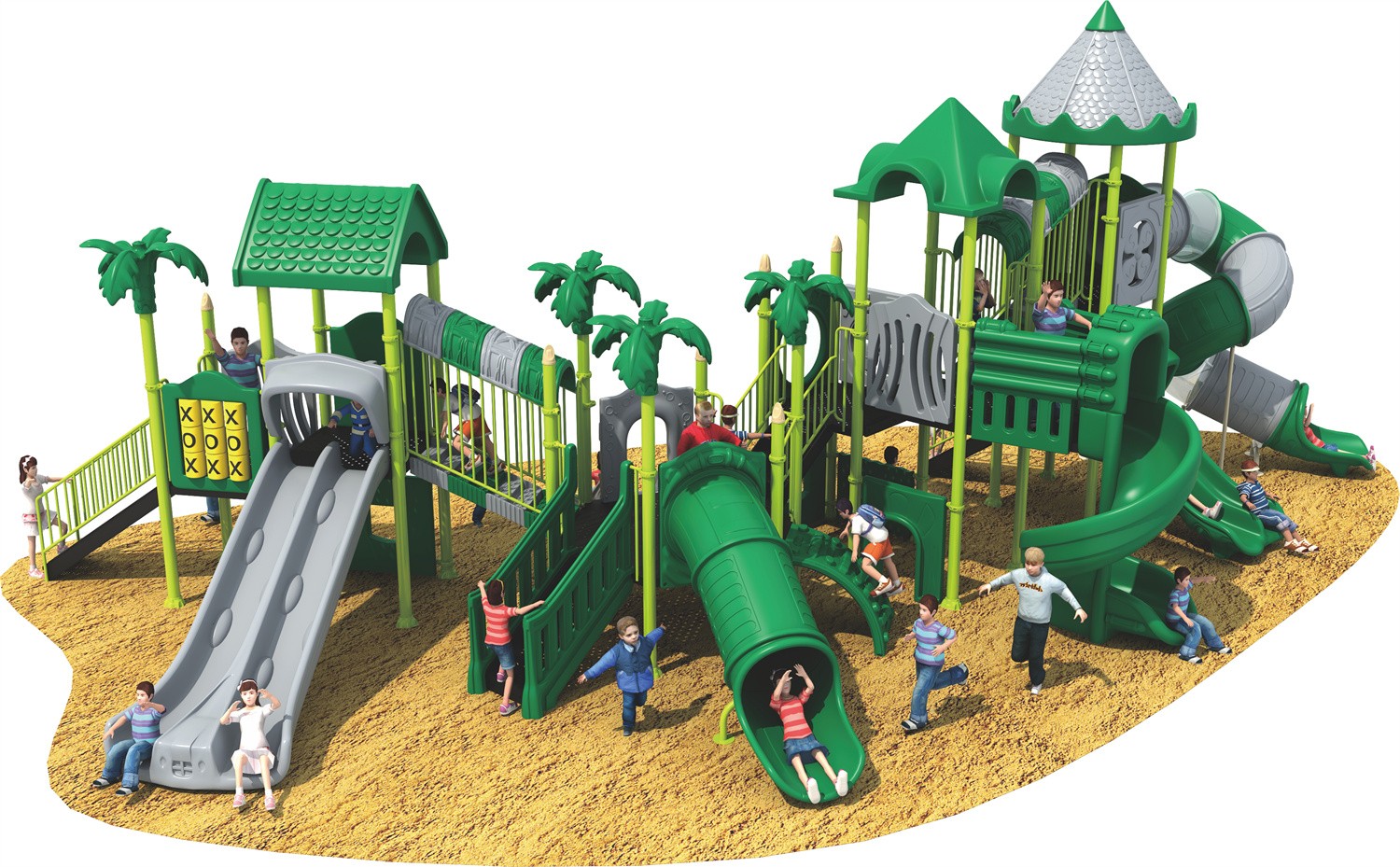
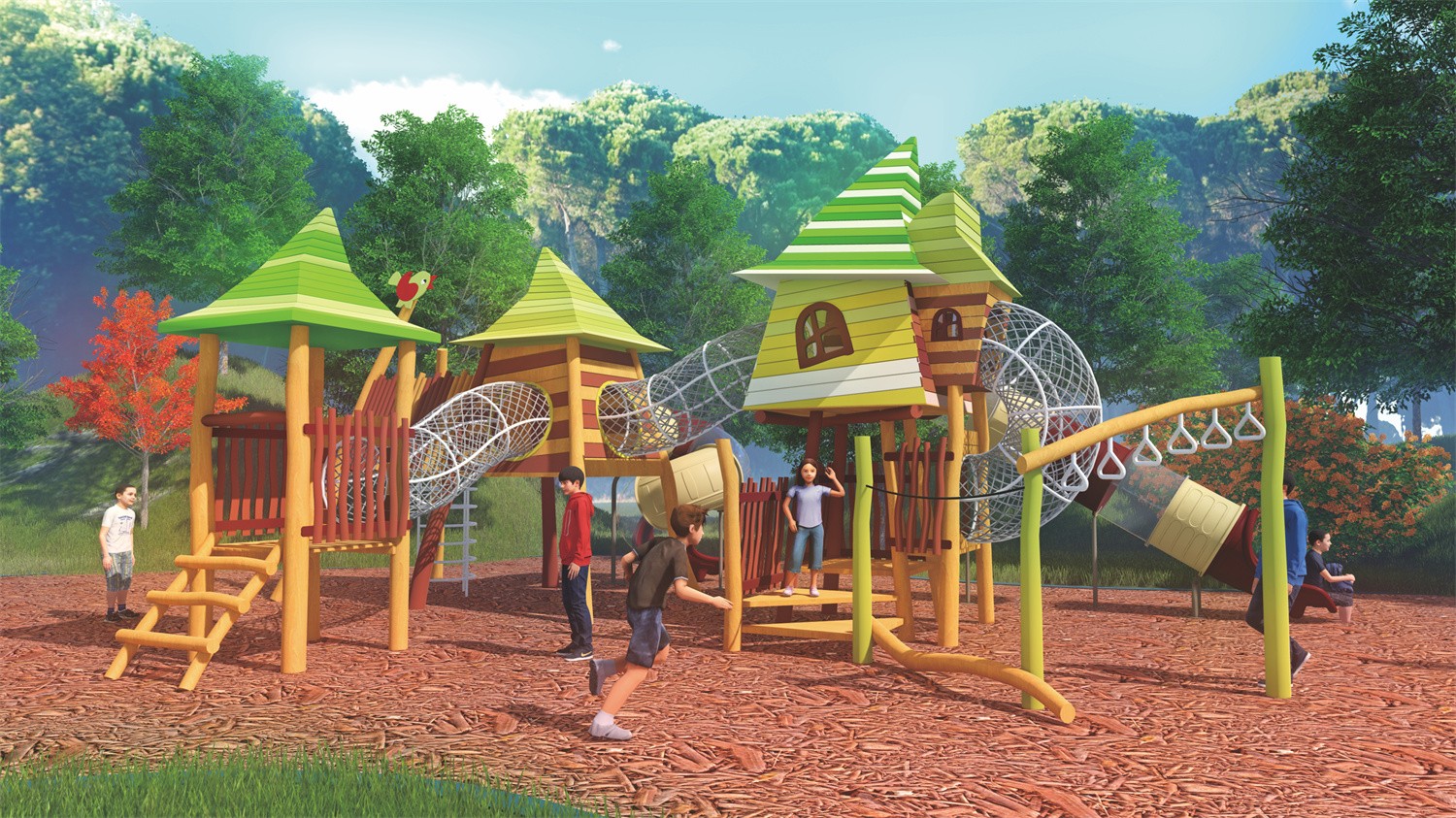
Plastic slides and wooden slides each have their own advantages in terms of safety. However, when considering factors such as overall material stability, daily maintenance difficulty, and long-term usage risks, factory-produced plastic slides are generally safer in most usage scenarios, especially suitable for home use or environments where young children frequently come into contact with them.
1. Material Safety: Both meet the standards, but plastic is easier to control risks.
Plastic slides: Regular products use food-grade LLDPE (linear low-density polyethylene) or high-density polypropylene (PP) materials, which are non-toxic and odorless, resistant to ultraviolet rays, and anti-static. Materials that have passed safety certifications such as EN71-8 do not release harmful substances. Their surfaces are smooth, without gaps, and are not prone to bacterial growth or dirt accumulation, making cleaning and maintenance simple.
Wooden slides: High-quality woods such as African teak or Russian larch are treated by dehydration and carbonization, providing anti-corrosion and anti-termite properties. They are coated with children-specific environmentally friendly paint, theoretically safe and non-toxic. However, if the craftsmanship is not up to standard, the wood may crack, mold, or harbor fungi, posing potential health risks.
✅ Conclusion: As long as they pass the formal certification, both materials are safe in themselves, but plastic slides have more stable quality and better risk control due to industrialized production.
2. Structure and Surface Treatment: Plastic slides have fewer "hidden risks"
Plastic slides are mostly "one-piece molded", using vacuum roll molding technology, without joint seams, avoiding problems such as wood splinters, rough edges, or exposed nails, and children playing barefoot are less likely to get injured.
Wooden slides, although polished, may develop tiny cracks or paint peeling after long-term exposure to sun and rain. If not maintained in time, they may produce splinters or sharp edges, increasing the risk of scratches.
Plastic slides often come with anti-slip steps, raised guardrails, and triangular support structures, making them more stable and suitable for children to use independently.
3. Environmental Adaptability and Durability: Plastic is "more convenient"
Plastic slides are waterproof, resistant to corrosion, and anti-aging, suitable for long-term outdoor use, and are less likely to deform due to moisture or be eaten by insects.
Wooden slides require regular painting maintenance (suggested 1-2 times a year), otherwise they may fade, crack, and require high maintenance costs and continuous investment from users.
In areas with heavy rain, high humidity, or intense sunlight, the lifespan and safety of wooden slides decline more rapidly.
4. Appropriate Contact Scenarios for Children: Plastic is more suitable for frequent use
For children aged 3-6 years old who play daily, plastic slides are lightweight, colorful, and easy to assemble, making them more suitable for home balconies, yards, or public spaces in residential areas.
Wooden slides have good texture and unique designs (such as pirate ships, castles), and are more suitable for scenarios that emphasize aesthetics and atmosphere creation, such as kindergartens or theme parks, but require regular inspections by dedicated personnel.
5. Safety Certification is Key: Regardless of the material, recognize the EN71-8 standard
Whether it is plastic or wooden slides, whether they have passed the EN71-8 certification is the core basis for determining their safety. This standard has strict requirements for material non-toxicity, structural stability, edge smoothness, and load-bearing capacity. When purchasing, prioritize products clearly marked as meeting this standard.
 浙公网安备33032402002684号