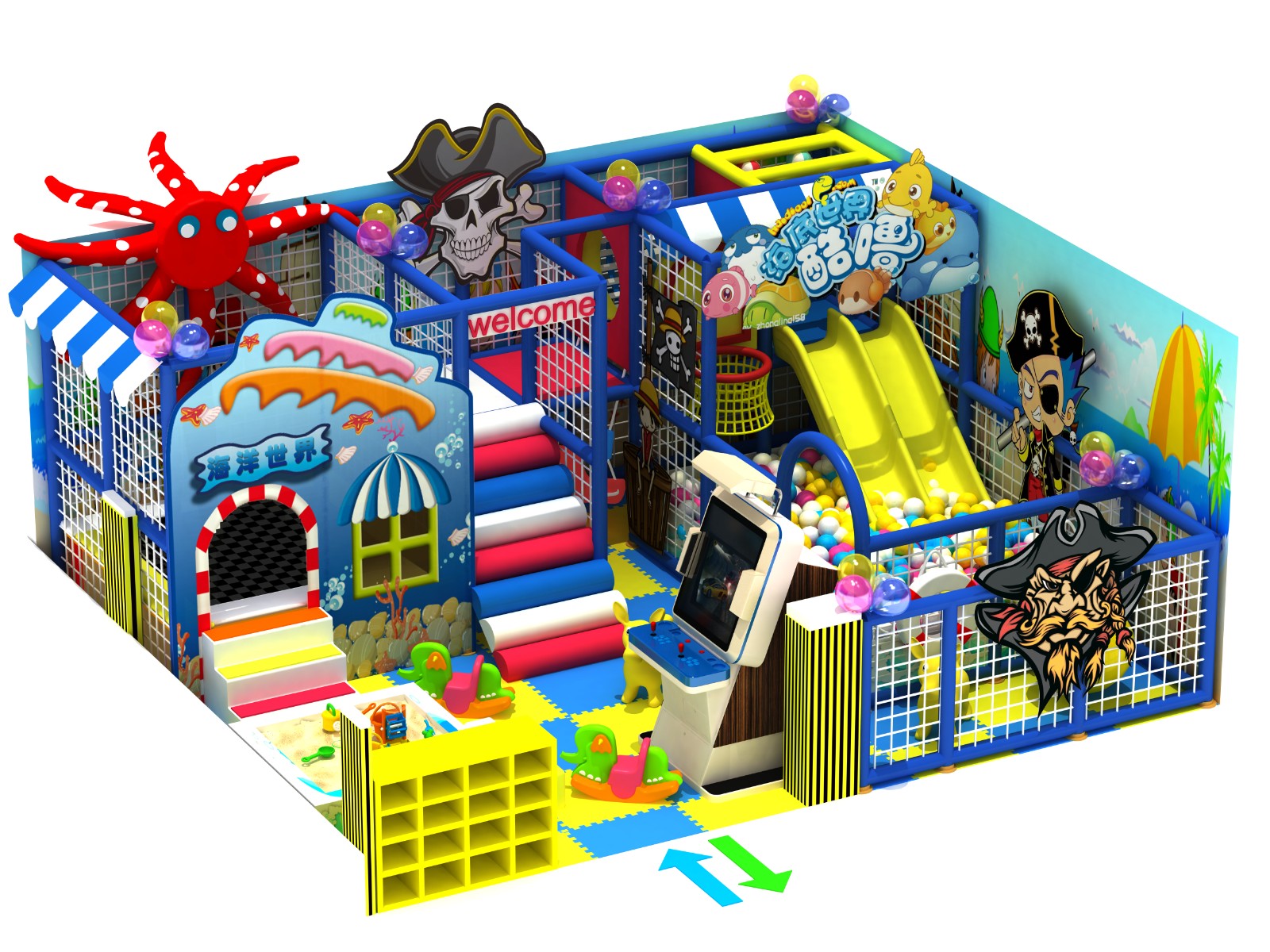
To determine whether the materials of amusement equipment are safe, a comprehensive assessment needs to be conducted from four core dimensions: the material itself, structural design, environmental protection performance, and compliance certification. Special attention should be paid to the risk that children may be exposed to harmful substances through contact, chewing, or inhalation.
1. Smell and Touch: Directly Judging Material Safety
The most direct way is through sensory screening:
Smell the Odor: Regular environmentally friendly materials should have no pungent chemical smell. If the equipment emits a strong plastic or glue smell, it may contain excessive phthalates or volatile organic compounds (VOCs), and long-term exposure may affect the endocrine system of children.
Touch the Surface: All contact surfaces must be smooth without burrs, and the edges should be rounded to avoid skin scratches. Especially at the connection points between plastic and metal, there should be no sharp edges, cracks, or wood thorns as potential injury sources.
2. Check Certifications: Identifying Authoritative Safety Standards
Compliant products usually have the following certification marks, which are important endorsements of material safety:
3C Certification: China Compulsory Product Certification, applicable to some large-scale amusement facilities, ensuring basic safety requirements.
EN71-8: European Children's Amusement Equipment Safety Standard, covering material non-toxicity, structural stability, and usage environment requirements, especially strict limits on heavy metals such as lead, mercury, and harmful chemical substances.
GB 34272-2025 "Safety Specifications for Small Amusement Facilities": The new national standard will be implemented on May 1, 2026, strengthening protection against head, neck, and finger squeezing, and expanding the scope of controlled harmful substances, such as phthalate plasticizers.
✅ It is recommended to prioritize products that have passed EN71-8 or comply with GB 34272-2025 standards, as their material safety is more guaranteed.
3. Examine Material Types: Prefer Eco-friendly and Biodegradable Materials
With the development of green manufacturing, more and more enterprises are adopting sustainable materials:
Food-grade Plastic: Such as HDPE and PP, non-toxic and odorless, resistant to aging, often used for slides and climbing frames.
Biobased Biodegradable Materials: Such as PLA (Polylactic Acid), derived from corn starch, with a degradation rate of over 90% within 180 days under industrial composting conditions, in line with the circular economy trend.
Natural Materials: Bamboo fiber, cork, natural latex, etc., zero formaldehyde release, antibacterial and antifungal, suitable for wall decoration, floor buffer layer.
Avoid using "black-hearted cotton" or soft packaging materials filled with industrial waste, as these materials may carry bacteria or release harmful gases.
4. Inspect Structure and Process: Safety Not Only Lies in the Material Itself
Even if the material is qualified, unreasonable design can still bring risks:
Firmness of Connections: Screws and bolts should not protrude, welding points should be flat and free of cracks, to prevent scratches or loosening and falling off.
Compliance of Protective Gaps: Test the equipment gaps with your palm to prevent fingers from getting stuck. The new standard clearly sets safety values for squeezing gaps to avoid children being injured.
Proper Buffer Design: The drop area should be covered with sufficient thickness of EVA foam floor mats or rubber floors to provide effective buffering protection.
 浙公网安备33032402002684号