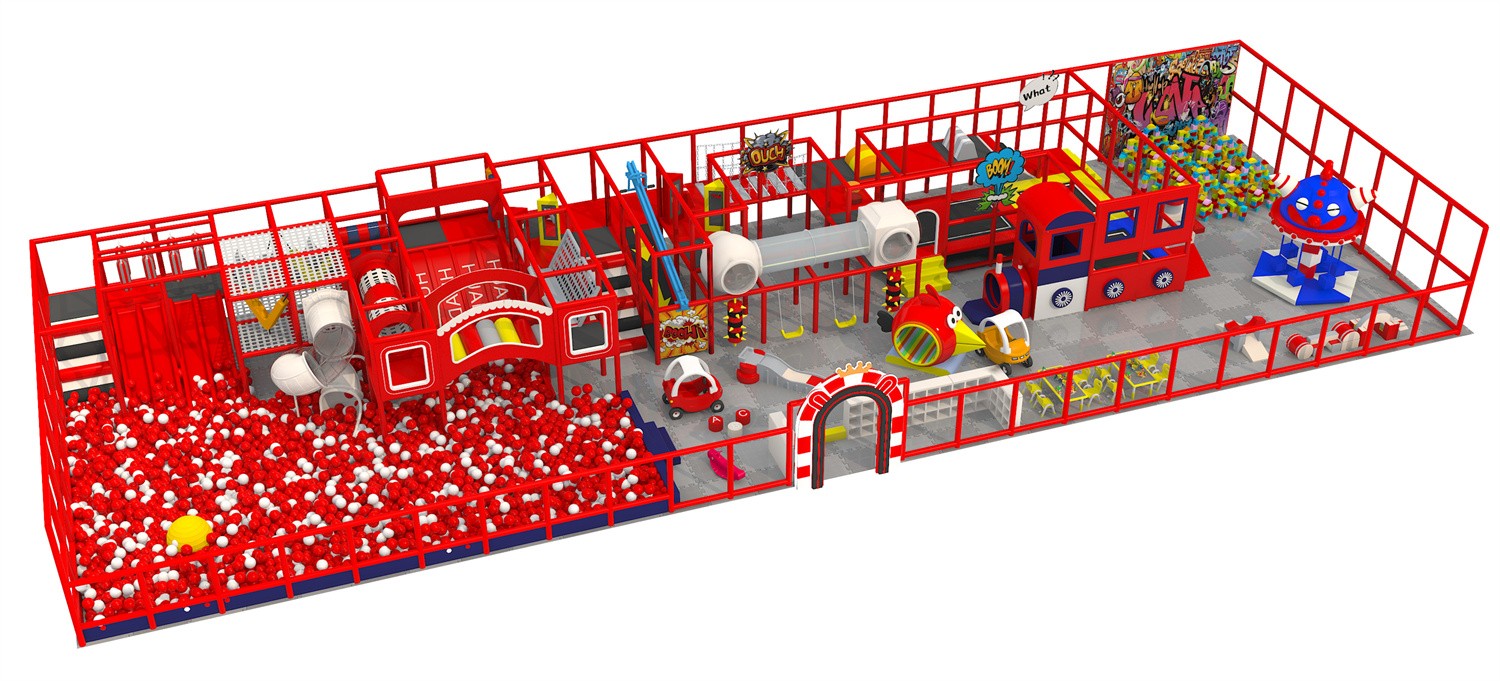
The maintenance of indoor children's play areas is crucial for ensuring children's safety, prolonging the lifespan of equipment, and enhancing parents' trust. A scientific and systematic maintenance plan should cover aspects such as safety inspections, cleaning and disinfection, equipment maintenance, personnel management, and emergency preparedness.
I. Safety Inspection: The First Line of Defense Against Accidents
Structural Safety Inspection
Check whether the supporting structure is stable, and whether the connecting parts (screws, welding points) are loose, rusted or cracked.
Special attention should be paid to areas with high usage frequency such as slides, climbing frames, and rope nets, to prevent accidents caused by aging components.
Metal components need to be regularly descaled and coated with anti-rust paint to prevent the spread of rust.
Inspection of protective facilities
Make sure the protective net is undamaged and has no wide gaps to prevent children's hands and feet from getting stuck.
Check whether the anti-collision pads and soft covers are in good condition, and see if there is any exposure or collapse of the inner cores.
The emergency exits are unobstructed, and the emergency lighting and directional signs are clear and effective.
Electrical and Mechanical System Inspection
Carry out a trial run of the electric equipment to check for any abnormal sounds, leakage of electricity, or oil leakage, etc.
Regularly check if the wires are aging to avoid the risk of electric leakage; when cleaning the circuit, the power must be cut off before proceeding.
The moving parts such as bearings, chains, and swing arms should be lubricated once every 1-2 months to ensure smooth operation and durability.
II. Cleaning and Disinfection: The Core Element in Protecting Children's Health
High-frequency cleaning program
Ocean Ball: It is recommended to clean it thoroughly once a month. You can soak it in diluted disinfectant solution and then rinse it, or use a dedicated ball cleaning machine. You can also wash it in the gentle cycle of the washing machine.
Sandpit: Remove contaminated sand (such as vomit) in time. Regularly spray Chinese medicine-based disinfectants. Mulberry seed-like substances cannot be washed with water; they need to be exposed to the sun for sterilization.
Floor mat and floor: Clean up garbage daily, mop and clean regularly, and spray with peracetic acid for disinfection once a week.
Daily cleaning procedure
If urine, vomit, etc. are found, they should be immediately cleaned up and the scene should be disinfected with disinfectant.
The entire facility is disinfected once every three days, using 84 disinfectant or the dedicated disinfection equipment spray.
Keep the indoor area well-ventilated and replace the air conditioning filter regularly to reduce the spread of bacteria.
Different cleaning methods for different materials
Plastic/Glass Fiber: Wipe with a solution of soap water or disinfectant laundry detergent, rinse with clean water, and then dry.
Wooden toys: Just wipe them with a damp cloth. Avoid soaking them as it may cause deformation.
Cuddly toys: Can be dry-cleaned or machine-washed (select gentle mode), please refer to the washing label.
III. Equipment Maintenance and Record Management: Achieving Long-Term Operation
Regular Maintenance Plan
Establish weekly, monthly and quarterly inspection systems, covering aspects such as cleaning, lubrication, tightening and testing.
The scratches on the slide surface of the playhouse should be polished. If the damage is severe, it needs to be replaced immediately.
Maintenance of records and file management
Establish electronic or paper-based maintenance logs to record the time, content, problems and handling results of each inspection.
Keep the purchase contract of the equipment, installation and commissioning records, maintenance reports and other materials, so as to facilitate traceability and evaluation.
Software and System Updates
If the equipment has intelligent monitoring or electric control systems, the software version needs to be updated regularly to fix any vulnerabilities.
IV. Personnel Training and Emergency Management: Establishing a Safety Closed Loop
Employee Training
All operators must undergo safety training, acquire knowledge of first aid, be familiar with the use of fire-fighting equipment, and understand the emergency evacuation procedures.
Regularly organize simulation drills, such as scenarios like fires, equipment failures, and child injuries.
Emergency Plan
Formulate emergency response plans, clearly defining the emergency organizational structure, handling procedures and evacuation routes.
Emergency supplies such as first-aid kits and fire extinguishers are available on site, and their effectiveness is regularly checked.
Parental communication and rule promotion
Post safety instructions at the entrance. It is recommended that children under 1.5 years old wear diapers.
Set up age-appropriate zones to prevent older children from colliding with younger ones and causing injuries.
 浙公网安备33032402002684号