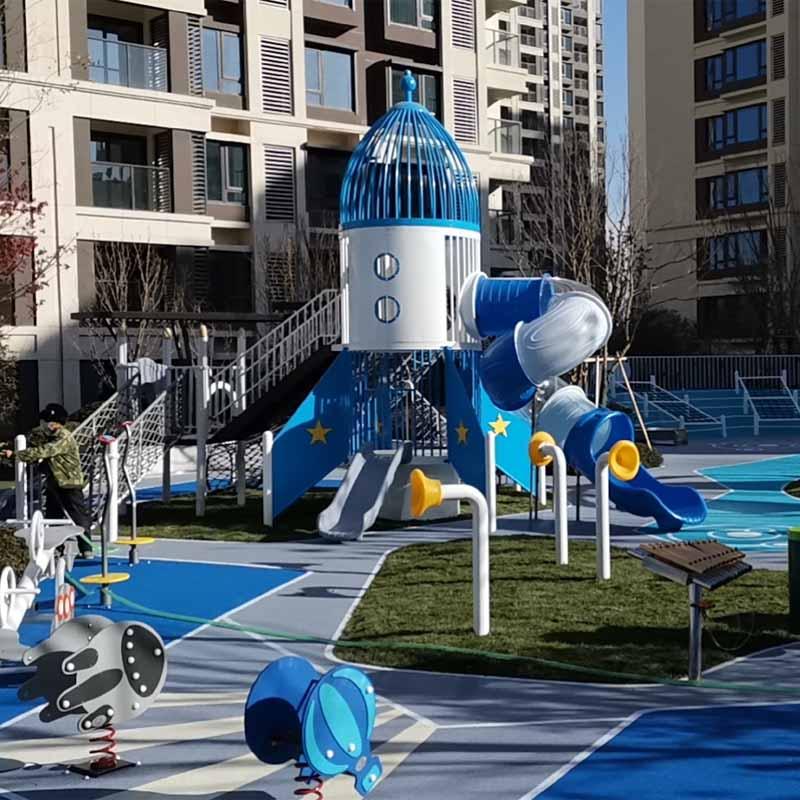
Outdoor slides are among the most essential pieces of non-powered play equipment for kindergartens, residential communities, parks, farms, and tourist attractions. Yet with so many options on the market — stainless steel, plastic, wood, PE panels — not to mention variations in size, design, and budget, many buyers feel completely overwhelmed.
Making the wrong choice isn't just a waste of money; it can also pose serious safety risks. This guide covers material selection, sizing, safety standards, budget planning, and supplier evaluation — everything you need to make a confident, informed decision.
The material of your slide determines its lifespan, safety performance, and maintenance costs. This is your first and most important decision.
Pros: Exceptional strength, corrosion resistance, long service life (10–15 years), fully customizable shapes (spiral, wave, long tube, etc.), smooth surface for an excellent sliding experience.
Cons: Higher upfront cost; surface can become hot under direct summer sun (shade design or shaded placement recommended); longer production lead time.
Best for: High-end kindergartens, premium residential communities, large public parks, tourist attractions, and any project requiring a bespoke slide design.
Pros: Bright colors, versatile designs, moderate pricing, easy installation, unaffected by temperature extremes (no scorching in summer, no freezing in winter), low maintenance.
Cons: May fade or age under prolonged UV exposure (opt for products with anti-UV additives); lower load-bearing and impact resistance compared to metal; typical service life of 5–8 years.
Best for: Standard kindergartens, community playgrounds, indoor and outdoor play areas, and projects with limited budgets.
Pros: Natural aesthetic that blends beautifully into outdoor environments, warm touch, high-end visual appeal.
Cons: Requires regular anti-rot and pest control treatment; prone to warping or mold in humid climates; higher ongoing maintenance; surfaces must be sanded meticulously to prevent splinters.
Best for: Nature-based kindergartens, eco-farms, forest-themed parks, and venues pursuing a natural design style.
Pros: One-piece seamless construction, rounded edges, superior safety profile, ideal for toddlers.
Cons: Limited size and shape options; less suitable for large-scale combinations; moderate impact resistance.
Best for: Early childhood centers, toddler play areas, and indoor soft play facilities.
| Priority | Recommended Material |
|---|---|
| Maximum durability | Stainless Steel |
| Best value for money | PE Panels / Engineering Plastic |
| Natural aesthetics | Wood |
| Toddler safety | Rotomolded Plastic |
1.0–1.5m (3.3–5ft): Suitable for ages 2–5, gentle slope, high safety
1.5–2.5m (5–8ft): Suitable for ages 5–10, moderate speed and excitement
2.5m+ (8ft+): Suitable for ages 8 and above, typically requires enclosed or semi-enclosed designs
Single slide: 50–60cm (20–24in) width is sufficient
Double / parent-child slide: 80–100cm (31–39in) width to accommodate an adult and child together
The buffer zone at the slide exit must be at least 1.5x the slide height in length
Allow a minimum of 1.5m (5ft) of safety clearance on both sides of the slide
Measure your site first, then choose a model — never do it the other way around
Outdoor slides should comply with EN 1176 (Playground Equipment Standard) in Europe or equivalent local standards. Key requirements include:
Guardrails: Platforms over 1m (3.3ft) high must have protective railings
Entrapment Prevention: Gaps and joints must not trap children's fingers (the 5–12mm range is a critical hazard zone)
Fall Prevention: Side panel height must increase proportionally with slope gradient
Surface Finish: No sharp edges, burrs, or protrusions
Impact-Absorbing Surface: Install safety mats, sand, or engineered wood fiber beneath and around the slide, with a minimum depth of 20cm (8in)
Always request a third-party test report from the manufacturer. This is non-negotiable.
The following are mid-to-high quality market reference prices (subject to actual quotation):
| Type | Estimated Price Range (USD) |
|---|---|
| Small plastic single slide (under 1.5m) | $400–1,200 |
| Medium PE panel combo slide (with platforms & climbing) | $2,000–7,000 |
| Large custom stainless steel slide | $4,000–20,000+ |
| Wooden themed combo slide | $2,800–11,000 |
| Large outdoor multi-play unit (includes slides) | $7,000–40,000+ |
Cost-saving tip: Shipping, installation, and ground preparation are often overlooked. Always confirm whether your quote includes these.
"Do you have test reports and certifications?" — Walk away if the answer is no.
"Can you show me case studies or sites I can visit?" — Request real photos or references.
"What's your warranty period and after-sales response time?" — Structural components should carry at least a 5-year warranty.
"Do you handle installation in-house or subcontract it?" — Factory-direct installation is always more reliable.
"Can you customize based on our site dimensions and requirements?" — A professional manufacturer should offer site surveys and design services.
| Your Situation | Recommended Solution |
|---|---|
| Tight budget, small site | PE panel single or small combo slide |
| Priority on quality and longevity | Custom stainless steel slide |
| Emphasis on natural aesthetics | Wooden combo slide |
| Mainly for toddlers | Rotomolded one-piece slide with safety mats |
| Need a visual landmark that attracts visitors | Large custom stainless steel spiral/wave/tube slide |
When choosing a slide, safety comes first, material second, and appearance third. Don't get the order wrong.
For purchasing inquiries or a customized proposal, feel free to contact Bailu Toy. We provide free site surveys and one-on-one product selection guidance tailored to your needs.
Safety First: Key Certifications and Standards for Playground Slides (ASTM/EN)
 浙公网安备33032402002684号